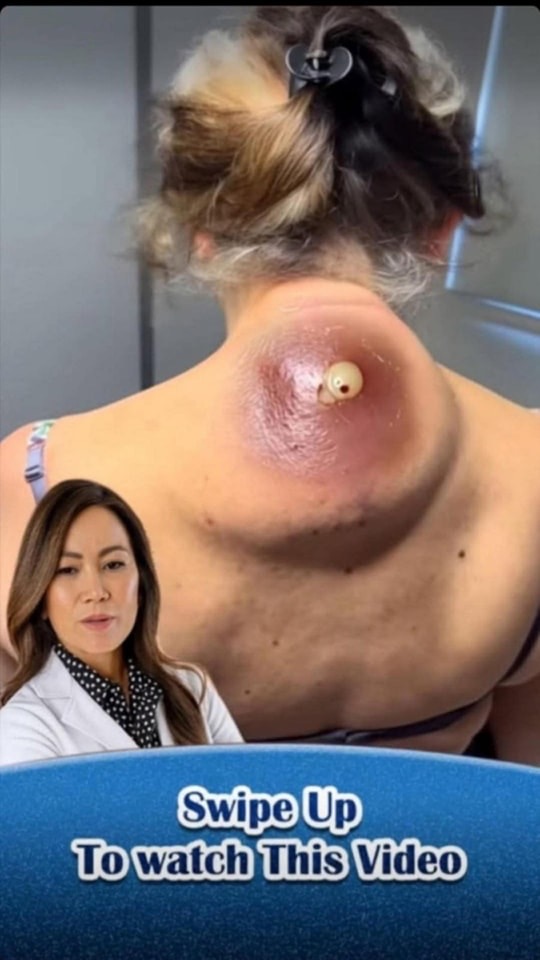
At first glance, the image is shocking. A large, swollen mass can be seen on the back of a woman’s neck, red, inflamed, and stretched tightly under the skin. What appears to be a small drainage opening in the center suggests that the swelling was not something that appeared overnight, but rather developed gradually over time. Cases like this often raise immediate concern, but medical professionals explain that such growths are more common than people think.
In situations like this, the most likely cause is a severe infected cyst or abscess. These typically begin as small, harmless lumps beneath the skin — often a sebaceous cyst formed when a hair follicle or oil gland becomes blocked. At first, the lump may feel soft and painless. However, if bacteria enter the area, the cyst can become infected. Once infection sets in, the body responds with inflammation, causing swelling, redness, warmth, and increasing pain.
Over days or even weeks, the trapped pus and fluid continue to build pressure under the skin. The surrounding tissue becomes tight and extremely tender. In advanced cases like the one shown, the abscess can grow significantly in size, especially if medical treatment is delayed. Many patients ignore early symptoms, thinking the lump will disappear on its own — but infections rarely resolve without intervention once they reach this stage.
When the patient finally sought medical help, doctors likely performed a physical examination and possibly imaging tests such as an ultrasound to determine the depth and size of the infection. Because of the extreme swelling and visible drainage point, the medical team would have diagnosed it as a large abscess requiring immediate treatment.
The removal process for a mass like this is called incision and drainage. Under sterile conditions, and typically using local anesthesia to numb the area, the physician makes a careful incision into the abscess. Once opened, the built-up pus and infected material are drained out. This step immediately relieves pressure and reduces pain. In severe cases, a small drainage tube may be placed temporarily to allow continued fluid release and prevent the infection from sealing back inside.
After drainage, the cavity is thoroughly cleaned with antiseptic solution to remove remaining bacteria and debris. The patient is usually prescribed antibiotics to control the infection systemically and prevent it from spreading further into the bloodstream — a dangerous condition known as sepsis.
Recovery depends on how advanced the infection was before treatment. Fortunately, with prompt medical care, most patients recover well. Swelling decreases significantly within a few days, redness fades, and the wound gradually heals from the inside out. Proper wound care, regular dressing changes, and follow-up appointments are crucial during this phase.
In this case, the patient was fortunate to receive treatment before life-threatening complications developed. While the image may look alarming, it serves as an important reminder: any growing, painful lump accompanied by redness and swelling should be evaluated by a healthcare professional as soon as possible. Early intervention can prevent severe infection, minimize scarring, and, most importantly, protect overall health.
What seems terrifying at first glance is often treatable — especially when medical care is sought in time.