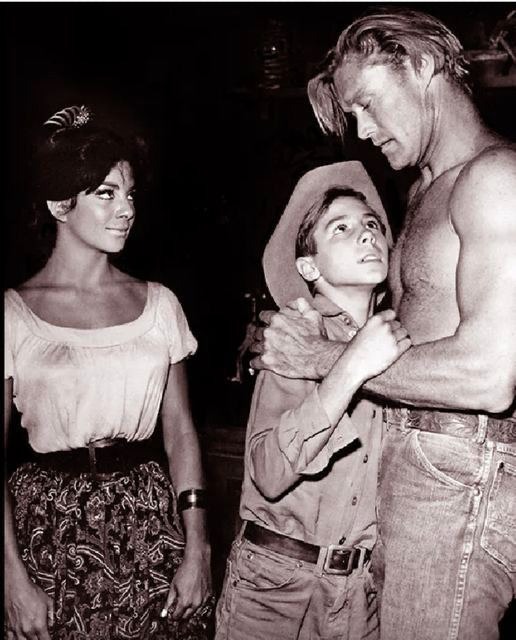
Even after more than six decades, the father-son bond at the heart of The Rifleman remains one of the most beloved relationships in television history. Airing from 1958 to 1963, this classic Western captured audiences with its powerful storytelling, emotional depth, and strong moral foundation. For many families growing up in the late 1950s and early 1960s, it wasn’t just entertainment — it was a weekly lesson in integrity, responsibility, and love.
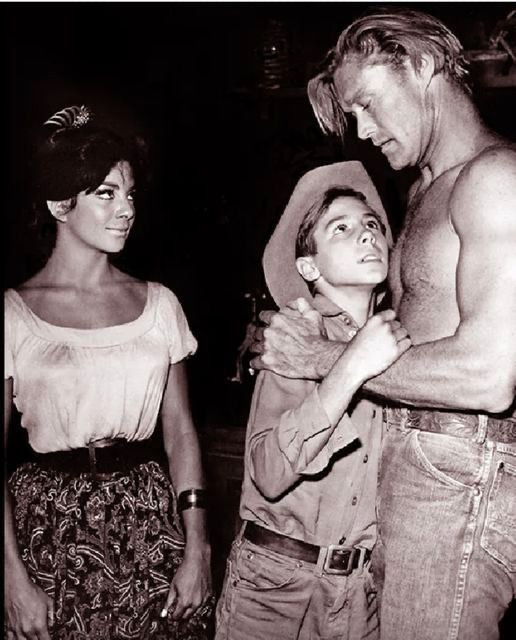
The series starred Chuck Connors as Lucas McCain, a widowed Civil War veteran raising his young son Mark in the frontier town of North Fork, New Mexico Territory. Mark was portrayed by Johnny Crawford, whose performance brought sincerity and vulnerability to the role. Together, their on-screen chemistry created a dynamic that felt authentic and heartfelt. Lucas wasn’t just a sharpshooter with a modified Winchester rifle — he was a devoted father determined to raise his son with strong values in a rough and often dangerous world.
What set the show apart from many other Westerns of its time was its emotional core. While gunfights and outlaws were certainly part of the formula, the true focus was always on character development and moral dilemmas. Each episode typically presented a conflict that tested Lucas and Mark’s principles. Whether confronting prejudice, greed, fear, or injustice, the stories emphasized honesty, respect, courage, and compassion. The lessons never felt forced; they were woven naturally into the narrative, often ending with a quiet but meaningful father-son conversation.
Of course, like many early television Westerns, The Rifleman was not without its flaws. Sharp-eyed fans have spotted historical inaccuracies and production blunders over the years. Certain costumes, props, and even dialogue occasionally reflected 1950s sensibilities more than authentic 1880s frontier life. Firearms sometimes had unrealistic firing capacities, and modern-looking items would occasionally slip into scenes. Yet for most viewers, these minor errors only add to the charm. They serve as reminders of a different era of television production — a time when storytelling mattered more than perfect historical precision.
Beyond the occasional mistake, the show also contains fascinating trivia that devoted fans love to uncover. For example, Chuck Connors was one of the few actors of the era who had been a professional athlete before entering Hollywood, having played both professional basketball and baseball. His physical presence and natural authority made Lucas McCain both intimidating and deeply human. Meanwhile, Johnny Crawford grew up on the show, and viewers watched his character mature alongside him, strengthening the authenticity of their bond.
Perhaps what makes The Rifleman endure is its simplicity. In today’s fast-paced television landscape filled with complex antiheroes and layered plot twists, there is something refreshing about a show built on clear moral convictions. Lucas McCain stood firmly for what was right, but he was never portrayed as perfect. He made mistakes, learned from them, and taught his son to do the same.
In the end, historical inaccuracies hardly matter. What continues to resonate is the emotional truth at the center of the series. The Rifleman reminds us that strength and kindness can coexist, that discipline and love are not opposites, and that a father’s guidance can shape a young boy into a principled man. That timeless message is why this legendary Western still holds a special place in television history.