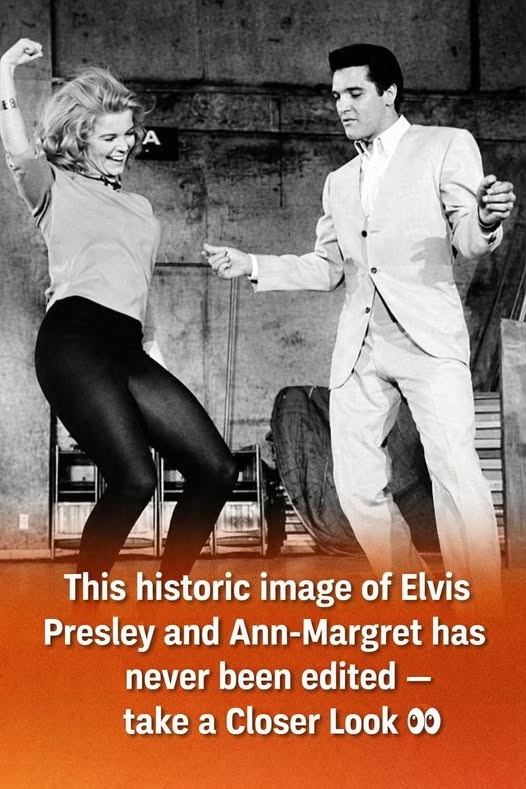
Viva Las Vegas stands as one of the brightest jewels in Elvis Presley’s cinematic career, remembered not only for its vibrant musical numbers but also for the electric chemistry between Elvis and his co-star, Ann-Margret. Released in 1964 at the height of Elvis’s Hollywood fame, the film captures the glittering spirit of 1960s Las Vegas while delivering a fast-paced romantic musical packed into a concise 85 minutes—making it the shortest film of Presley’s career.
In the movie, Elvis plays Lucky Jackson, a determined race car driver who arrives in Nevada hoping to win a major competition and use the prize money to buy a new engine for his car. Along the way, he meets Rusty Martin, portrayed by Ann-Margret, a spirited swimming instructor and dancer whose charisma nearly steals the entire show. Their on-screen dynamic is playful, flirtatious, and competitive, most memorably showcased in their energetic duet, “The Lady Loves Me.” The performance crackles with personality, reflecting a spark that many believed mirrored their real-life relationship off camera.
Though critics offered mixed reviews upon its initial release, audiences were captivated. The film ultimately became Elvis’s highest-grossing movie, even surpassing his earlier smash hit, Blue Hawaii. In a surprising box office twist, Viva Las Vegas out-earned Blue Hawaii by exactly $450—a small but symbolic margin that cemented its commercial triumph. Over time, what may have seemed like just another Presley musical evolved into a beloved American classic, praised for its infectious energy and stylish depiction of old Las Vegas.
Behind the scenes, however, not everything was harmonious. Directed by George Sidney, the production reportedly created tension for Elvis. He was said to be frustrated with Sidney’s directing style, feeling that certain camera angles and editing choices favored Ann-Margret’s presence over his own. At only 22 years old during filming, Ann-Margret’s star power was rapidly rising, and in some theaters she was even billed above Elvis—an almost unthinkable move given his global fame at the time. This subtle rivalry may have added an extra spark to their performances, pushing both stars to deliver some of their most dynamic work.
The film’s legacy extends beyond its leading pair. The soundtrack featured contributions from a then-rising musician, Glen Campbell, who would later become a major star in his own right. Additionally, one of the film’s background dancers went on to receive multiple Academy Award nominations, adding an unexpected layer of prestige to the production’s history.
Off screen, Elvis and Ann-Margret shared a deep and complicated relationship. Although Elvis was committed to Priscilla Presley, reports suggest he once expressed a desire to marry Ann-Margret. Their romance eventually ended, but their bond endured. They remained close friends until Elvis’s death in 1977. In a poignant final gesture, Ann-Margret was the only female co-star to attend his funeral, underscoring a connection that outlasted fame, rivalry, and the dazzling lights of 1960s Las Vegas.