
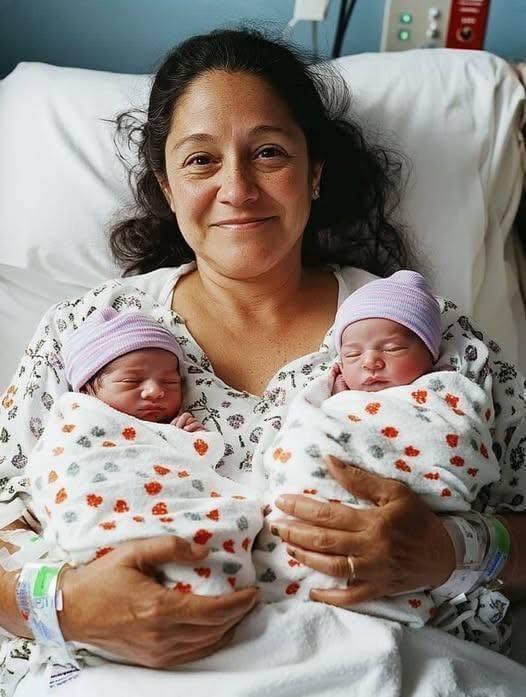
The idea of having twins has always captured the imagination of many couples. The thought of two babies growing together in the womb, arriving on the same day, and sharing a lifelong bond feels almost magical. Stories of twin births often spark curiosity, especially when they involve unusual circumstances—such as a woman in her late fifties welcoming not one, but two newborns into the world. While such cases are rare and require careful medical supervision, they remind us how complex and fascinating human biology can be.
In general, the likelihood of conceiving twins depends largely on genetics and natural biological factors. One of the strongest influences is family history, particularly on the mother’s side. Women who inherit a tendency to release more than one egg during ovulation have a greater chance of conceiving fraternal (non-identical) twins. If a mother, grandmother, or sister has had twins, the odds may increase slightly for future generations. Identical twins, however, occur randomly and are not typically linked to family traits.
Age also plays a significant role. Women between the ages of 35 and 39 are statistically more likely to release multiple eggs in a single cycle due to hormonal changes, particularly fluctuations in follicle-stimulating hormone (FSH). Although fertility naturally declines with age, the chance of conceiving twins during these later reproductive years is somewhat higher compared to women in their twenties. However, pregnancies at an advanced maternal age—especially beyond 50—are considered high-risk and require intensive medical monitoring to ensure both maternal and fetal health.
Lifestyle and diet have also been studied for possible connections to twin pregnancies. Some research suggests that women who consume diets rich in dairy products and protein may have a slightly higher chance of multiple ovulation. Additionally, women with a moderately higher body mass index (BMI) have shown increased odds of carrying twins. Hormonal activity influenced by nutrition and body composition may contribute to these patterns, though no dietary approach guarantees twin conception.
Interestingly, conceiving while breastfeeding has been associated with a higher likelihood of twins in some cases. Hormonal fluctuations during lactation can occasionally lead to irregular ovulation patterns, potentially resulting in the release of more than one egg. Still, this remains uncommon and varies widely from person to person.
Medical advancements have significantly increased the number of twin births worldwide. Fertility treatments such as in vitro fertilization (IVF) and ovulation-stimulating medications often raise the chances of multiple pregnancies. These treatments may encourage the development of multiple eggs or involve transferring more than one embryo to improve the likelihood of success. While effective, such approaches also require careful monitoring due to the added risks associated with multiple gestations.
Ultimately, while certain factors may increase the probability of twins, there is no guaranteed method to ensure it. Genetics, age, biology, and medical intervention all interact in complex ways. For couples hoping to welcome twins, maintaining overall health and seeking professional medical guidance is essential. Whether expecting one baby or two, the priority should always remain a safe pregnancy and healthy outcome for both mother and children.