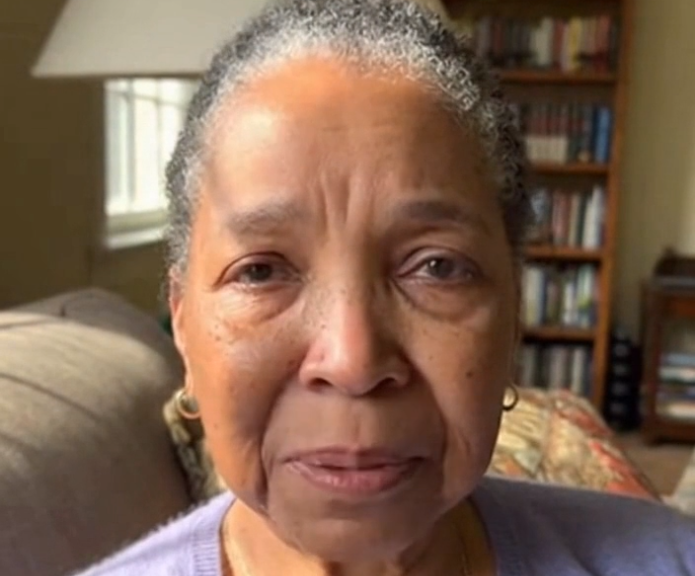
I am 80 years old now.
When people look at me, they see an elderly woman with silver hair, soft hands, and a gentle smile. They see wrinkles and assume they tell the whole story. But the deepest lines in my life are the ones you cannot see — the ones carved into me when I was just a little girl.
I grew up in a town where I never quite belonged.
I was different, they said. Different because of the color of my skin. Different because my hair didn’t look like theirs. Different because my family didn’t have much. Children notice differences quickly — and sometimes they turn those differences into weapons.
I was seven the first time I realized I was being bullied.
It started with whispers. Then giggles. Then names. The kind of names that don’t just sting — they stick. They followed me down hallways, onto the playground, into the classroom. I remember sitting at my desk, pretending to focus on the blackboard while the girls behind me mocked the way I spoke.
One afternoon, during recess, a group of girls surrounded me near the swings. One of them pushed me lightly — not enough to leave a bruise, but enough to make the others laugh. Another one said, “Why are you even here?”
I didn’t know how to answer that question then.
And for many years, I still didn’t.
I would go home every day and tell my mother that school was “fine.” I didn’t want her to worry. She already worked so hard. I told myself I was strong enough to handle it.
But the truth is, I wasn’t.
Bullying doesn’t just hurt you in the moment. It changes the way you see yourself. I began to shrink inside. I stopped raising my hand in class, even when I knew the answer. I stopped looking people in the eyes. I tried to make myself invisible.
I thought if I disappeared enough, the pain would stop.
Instead, I disappeared from myself.
As I grew into a teenager and then a young woman, I carried that insecurity everywhere. When someone complimented me, I didn’t believe them. When someone showed kindness, I waited for it to turn into cruelty. I questioned my worth in friendships, in love, in work.
Even when I achieved things — even when I built a family and a career — there was always a small voice inside me whispering, “You’re not enough.”
That voice wasn’t mine. It belonged to those children on the playground.
At 80 years old, I understand something I couldn’t understand back then: their cruelty said more about them than it ever did about me.
But healing takes time. Sometimes a lifetime.
When I look at my grandchildren now, especially my granddaughters, I pray they grow up in a world that teaches them confidence instead of shame. When I see a quiet little girl standing alone, I recognize her immediately — because I was her.
Bullying shaped me. It made me cautious. It made me sensitive to rejection. It made me doubt myself far longer than I should have.
But it also gave me empathy.
I became the woman who listens. The woman who notices the child sitting alone. The woman who offers kindness quickly, because I know what it feels like to go without it.
I am 80 years old, and I am still healing the little girl inside me.
She deserved protection. She deserved kindness. She deserved to feel like she belonged.
And if you are that little girl today — the one who feels different, unwanted, or small — please hear this from an old woman who has lived a long life:
You are not what they call you.
You are not what they laugh at.
And one day, you will grow into someone stronger than they ever imagined.