
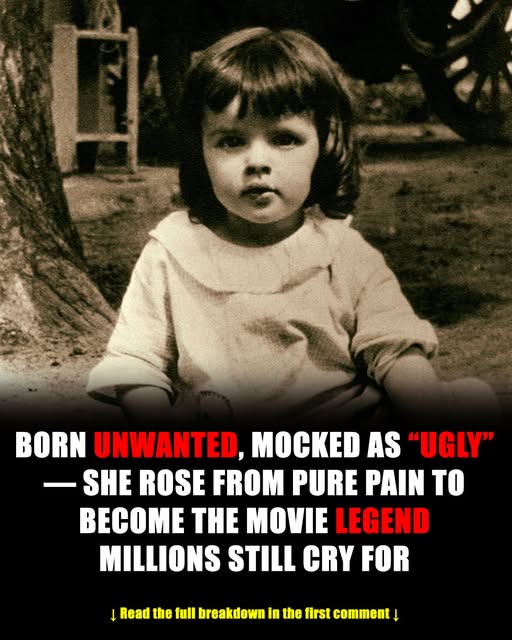
She glittered beneath relentless lights while the world watched in admiration, but few ever stopped to ask what it cost her. Fame wrapped around her life like barbed wire disguised as diamonds—beautiful from a distance, painful up close. People called it destiny, the story of a star born to shine. Yet for her, it often felt less like a blessing and more like a sentence she could never escape. Behind every standing ovation came another demand, another long rehearsal, another sleepless night. A little girl was slowly transformed into a legend, but the price of that transformation was her innocence.
She was born as Frances Gumm, a young girl with a remarkable voice and a simple dream: to be loved for who she truly was. She didn’t dream of pressure, endless expectations, or the heavy machinery of fame. But when Hollywood discovered her talent, her life changed forever. The film industry saw something extraordinary in her voice and presence, yet instead of nurturing the child behind the talent, it built a system that demanded perfection at any cost.
The studios gave her a new name—Judy Garland—and with it came a carefully crafted public image. Executives monitored every detail of her life, from her appearance to her schedule. Her waistline was measured more often than her happiness. Producers saw a profitable star, not a vulnerable teenager navigating a world far too harsh for someone so young.
Long working hours became normal. Days stretched into nights, and exhaustion was treated as an obstacle to be managed rather than a warning to slow down. Pills were often used to keep performers awake for filming or help them sleep when the cameras stopped rolling. For Garland, this cycle began early, weaving itself into her life before she could fully understand the consequences.
At the center of it all stood Hollywood’s powerful studio system, particularly Metro-Goldwyn-Mayer, where Garland spent many of her early years as a contract actress. The studio created some of the most beloved films in cinema history, including the classic The Wizard of Oz, where Garland’s performance and her song Over the Rainbow became cultural landmarks. Audiences saw magic on screen—a hopeful girl dreaming of a better place. But behind the scenes, the reality was far more complicated.
Despite the pressures, Garland possessed something no studio could manufacture: a deeply human voice filled with vulnerability and truth. When she sang, audiences felt something genuine. Her performances carried a sense of longing, as though every note contained a piece of her real story. It was this emotional honesty that made her unforgettable.
Throughout her life, Garland faced immense personal struggles. Fame, expectations, and the weight of public attention followed her everywhere. She fought through setbacks, disappointments, and moments of deep vulnerability. Yet again and again, she returned to the stage, determined to connect with audiences who loved her voice and spirit.
Her story remains both heartbreaking and powerful. It reminds us that talent can shine brilliantly even in difficult circumstances, but it also reveals the human cost of turning children into icons too quickly. The legend of Judy Garland still inspires generations, not only because of her extraordinary voice but because her life shows how strength and fragility can exist side by side.
In the end, her legacy is more than music or film. It is a reminder that behind every star is a human being—someone who once dreamed not of fame, but simply of being loved.