
By midnight, the search had turned into something heavier than urgency—it had become a quiet desperation that pressed against every door and window. Volunteers arrived wrapped in coats, carrying thermoses and hope, both cooling quickly in the night air. Someone brought printed photos of Perla, her smile frozen in ink, her eyes still bright with a life that now felt painfully distant. They were taped to poles, shop windows, and bus stops, each one asking the same silent question: Have you seen her?
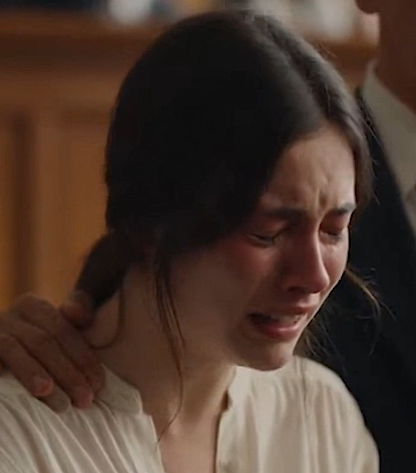
Her mother refused to go inside. She stood near the corner where Perla had last been seen, as if staying there could somehow rewind time. Every passing figure made her heart jump, every distant sound felt like it could be her daughter calling back. But the night gave nothing away. It only stretched on, indifferent and endless.
Police expanded the search radius before dawn. Drones hummed softly overhead, scanning rooftops and backyards. K9 units followed faint trails that seemed promising for a moment, only to circle back into confusion. Detectives reviewed hours of surveillance footage—grainy clips of passing cars, flickers of movement that could have been anything or nothing. Each second was examined, slowed, replayed, and still, no clear answer emerged.
By morning, the story had spread beyond the neighborhood. News crews arrived, their cameras capturing the raw emotion etched on every face. Reporters spoke in measured tones, but the weight of the situation bled through their words. Perla was no longer just a name whispered in fear—she had become a story the entire community carried.
Tips began pouring in. Some were hopeful, others misleading, many simply born from panic. A sighting at a nearby park. A suspicious vehicle seen hours earlier. A stranger walking too quickly down a side street. Officers chased each lead with urgency, but one by one, they unraveled, leaving behind only more questions.
Inside the house, Perla’s room remained untouched. Her bed was still unmade, her favorite toy lying where she had left it. Sunlight crept through the curtains, illuminating the small details that now felt unbearably loud—the unfinished drawing on her desk, the shoes by the door, the silence that replaced her laughter. It was a space frozen in time, refusing to accept what the world outside already feared.
Her mother finally stepped inside, but only for a moment. She walked through the rooms slowly, as if expecting Perla to appear from around a corner. When she reached the doorway to her daughter’s room, she stopped. The weight of reality pressed down harder than ever. She held onto the doorframe, steadying herself, whispering her name again—softer this time, as if afraid of breaking something fragile.
Outside, the search continued.
As the second day unfolded, the atmosphere shifted. Hope was still there, but it had changed shape. It was no longer bright and certain—it was quieter, more stubborn, clinging to the smallest possibilities. People spoke less, but searched harder. Every movement felt deliberate, every decision heavier.
Then, just as fatigue began to settle in, a new lead emerged.
A camera, overlooked at first, had captured something different. Not clear, not definitive—but enough to pause everything. A figure. A direction. A moment that hadn’t been fully understood before. Detectives gathered around the screen, studying every frame, their focus sharpening once again.
For the first time since Perla disappeared, the story shifted.
Not toward answers—not yet—but away from the darkness of not knowing.
And in that fragile shift, the search found its breath again.