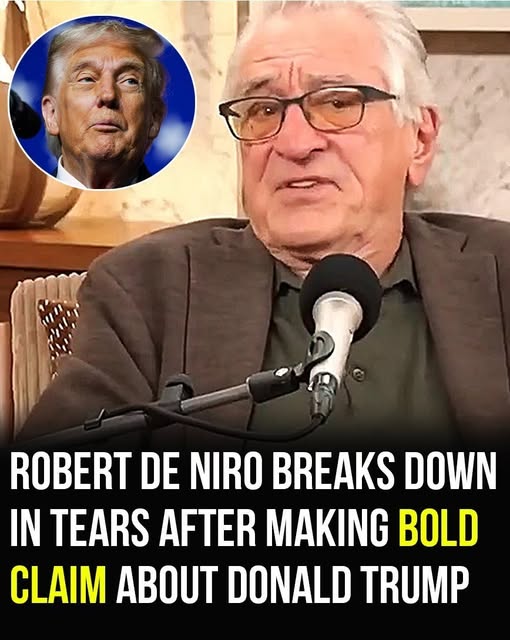
The room was quiet when Robert De Niro leaned toward the microphone, the weight of the moment already palpable. What had begun as a routine interview quickly transformed into something far more emotional. As cameras rolled, the legendary actor spoke with an intensity that caught even the host off guard. His usual composure seemed to falter, replaced by a vulnerability rarely seen in public appearances. Then, almost imperceptibly at first, his voice began to shake. Moments later, he paused, visibly fighting back tears, before delivering a message he said he “couldn’t stay silent about any longer.”
Those present recalled that De Niro had been reflecting on the current state of the country when the conversation shifted toward Donald Trump. The shift was subtle, yet it unleashed an unguarded response. What followed was not political theater or a rehearsed statement — it was raw emotion. The actor made a claim that many described as bold and deeply personal, arguing that the nation now stands at a crossroads unlike anything he had witnessed in his lifetime. His words carried the weight of someone deeply concerned, not merely an observer but a participant in the national conversation.
“I’m worried,” he admitted, his voice cracking under the weight of his own concern. “Not just for today — but for what comes next.” The statement lingered in the air, heavy and undeniable. He continued, urging Americans to remain informed, to stay engaged, and above all, to take responsibility for the direction of the country. The plea was neither partisan nor performative; it was an appeal to conscience, an insistence that civic duty matters.
Within hours, clips of the interview spread across social media, igniting a storm of discussion. Supporters lauded his courage, describing the moment as a powerful example of using one’s platform to speak out on issues of national importance. Critics were quick to respond, accusing him of overstepping the bounds of his role as an actor and entering political discourse inappropriately. Yet, regardless of political alignment, few could deny the intensity and sincerity of the moment. The vulnerability on display, the raw emotion, and the sincerity of the appeal resonated across ideological lines, creating a rare instance where public sentiment seemed universally engaged.
For De Niro, the focus was never on headlines or ratings. It was about conscience, about doing what he felt was morally necessary. The energy in the room, the silence punctuated only by the weight of his words, revealed a man compelled to speak despite the discomfort it might bring. As the interview wrapped, he wiped his eyes, leaned back in his chair, and took a deep breath, visibly drained yet resolute. His composure had returned, but the urgency of his message lingered.
This moment has since sparked nationwide conversation. From social media threads to late-night discussions, the dialogue around responsibility, civic engagement, and the state of the nation has intensified. For many, De Niro’s candidness serves as a reminder that even those outside political office have a role in shaping discourse and inspiring reflection. Whether people agree with him or not, his urgent plea has resonated deeply, demonstrating the power of honesty and moral courage in public life.
Ultimately, this wasn’t about politics, celebrity, or influence. It was about speaking out when silence is no longer an option, and reminding a nation that vigilance, care, and engagement are not optional — they are essential. De Niro’s words, raw and unfiltered, may have been brief, but their impact is enduring, sparking reflection, debate, and awareness across the country.