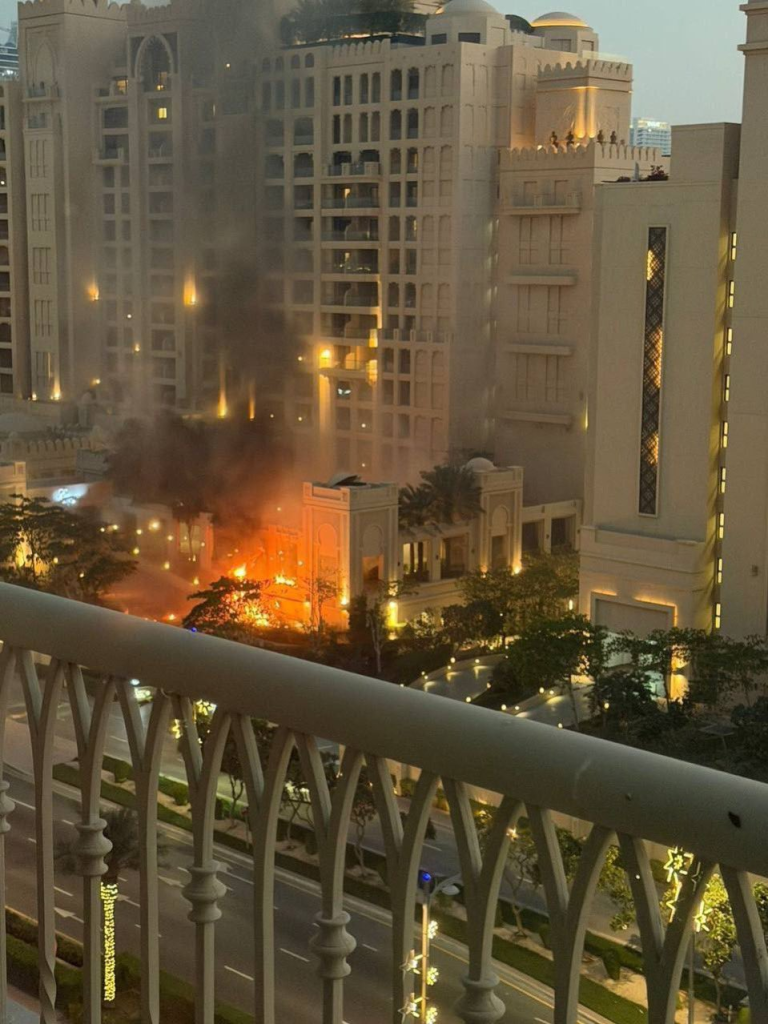
Tensions across the Gulf intensified dramatically as residents in Dubai and other parts of the United Arab Emirates received emergency alerts on their phones instructing them to “seek shelter” due to potential missile threats. The alert came amid explosive — and still unverified — claims that Ali Khamenei had been killed in a strike allegedly carried out by Israel and the United States.
The SMS message sent to citizens and residents urged everyone to remain indoors and await further instructions. The warning followed reports that Iran had retaliated after U.S. and Israeli strikes by targeting American military bases in the Persian Gulf. Missiles were reportedly intercepted in several cities across the region, including Doha and Abu Dhabi, heightening fears of a broader regional confrontation.
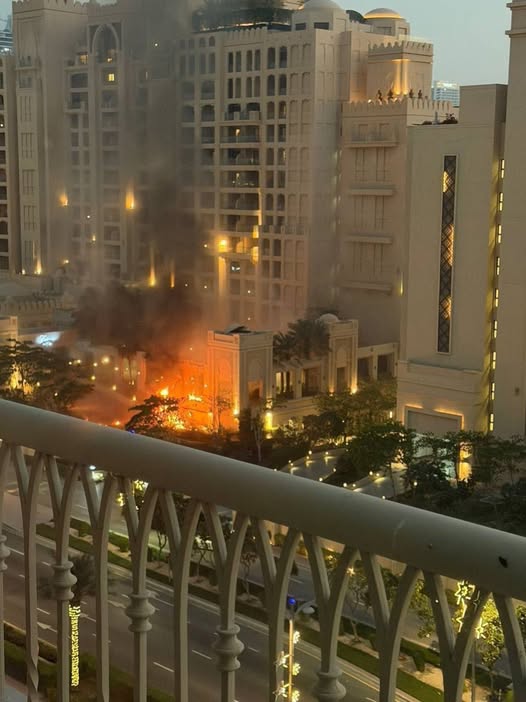
In Dubai, dramatic scenes unfolded near the iconic Palm Jumeirah. Witnesses reported loud explosions and thick plumes of black smoke rising near a hotel on the man-made island. One eyewitness told AFP that ambulances rushed toward the scene shortly after the blasts were heard. Authorities later confirmed that an “incident” in a building on Palm Jumeirah had caused a fire, leaving four individuals injured. According to the Dubai Media Office, Dubai Civil Defence brought the fire under control, and the injured were transferred to medical facilities for treatment.
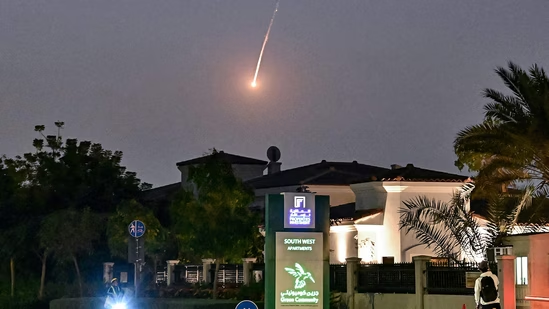
The UAE Ministry of Defence issued a statement confirming that the country’s air defence systems had intercepted several missiles. The ministry described the incident as a “blatant attack by Iranian ballistic missiles” and called it a “dangerous escalation” that threatens regional stability. Officials emphasized that all necessary measures are being taken to safeguard national security and stated that the UAE reserves the right to respond.
Tragically, authorities confirmed that one civilian in Abu Dhabi died after being struck by falling debris resulting from intercepted missiles. The incident underscored the unpredictable risks posed even when air defence systems successfully neutralize incoming threats.
Diplomatic efforts quickly intensified. S. Jaishankar spoke with Mohammed bin Zayed Al Nahyan to express India’s concern over the escalating situation. India, which has a large expatriate population in the Gulf, is closely monitoring developments. Meanwhile, Mohammed bin Salman and President Mohamed bin Zayed discussed Iran’s retaliatory strikes in a high-level call, expressing solidarity and condemning what they described as a destabilizing escalation.
Governments around the world have begun issuing travel advisories and safety warnings to their citizens residing in the Middle East. Countries with large expatriate communities in the UAE are urging nationals to remain vigilant and follow local authorities’ guidance.
As conflicting reports continue regarding Khamenei’s alleged death, uncertainty remains high. What is clear, however, is that the region has entered one of its most volatile periods in recent memory. With missile interceptions, emergency alerts, civilian casualties, and rapid diplomatic engagement unfolding simultaneously, the Gulf stands on edge as the international community watches closely for further developments.