
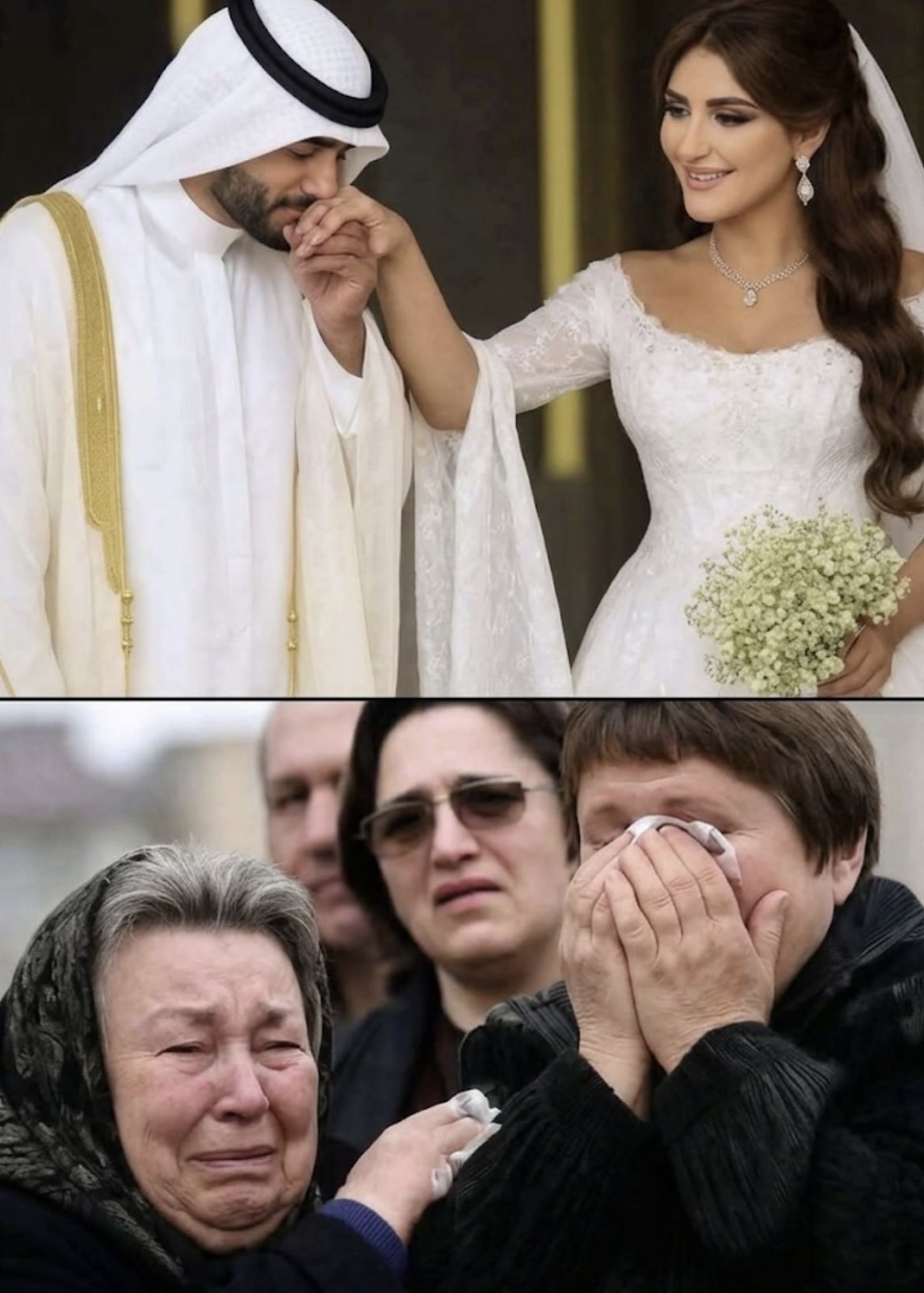
The wedding felt like something lifted from a dream — the kind people save and replay in their minds for years. Crystal chandeliers shimmered above a ballroom dressed in gold, while rare flowers, flown in from three different countries, filled the air with a soft, expensive fragrance. She walked in wearing a custom white gown, every detail tailored to perfection. He, a wealthy Arab businessman, stood waiting, composed and confident, lifting her hand gently to his lips as cameras flashed. To everyone watching, it looked like a fairytale brought to life.
Guests whispered among themselves, speaking of luck, of fortune, of a life transformed overnight. Some envied her, others admired her. It all seemed like the perfect ending to a love story that many had doubted was real in the first place.
But the illusion didn’t last.
The very next morning, she woke up alone in a vast villa that felt more unfamiliar than luxurious. The silence was heavy. Her phone was gone. Her passport, she was told, had been “secured for safekeeping.” At first, it sounded reasonable. But when she asked for it back, the atmosphere shifted. His tone changed — no longer warm, no longer gentle. It became cold, controlled, and final.
The man she had married just hours before was no longer affectionate. He was authoritative. He began telling her where she could go, what she could wear, and who she was allowed to speak to. Every small freedom she assumed she had was quietly stripped away.
By that afternoon, a deeper realization set in. The marriage documents she had signed — quickly, trustingly — were not what she believed them to be. Hidden within them were clauses she hadn’t fully understood, clauses that limited her rights in ways she never imagined. Divorce wouldn’t be simple. Leaving wouldn’t be easy. What once felt like a dream now felt like a carefully constructed trap.
Meanwhile, back home, her family grew desperate. Calls went unanswered. Messages stopped delivering. Fear spread quickly, followed by speculation. Some believed she had chosen wealth over love. Others assumed she knew exactly what she was getting into. Very few understood how quickly a situation can change when control replaces consent.
Within days, the transformation was complete. The glowing bride from the photos was gone. In her place was someone watched, restricted, and silent. The luxury that had impressed everyone now surrounded her like a cage — beautiful, but impossible to escape alone.
The promises made before the wedding were never meant to be kept. They were tools — carefully used to secure trust, and ultimately, obedience.
This story is not about culture, and it’s not simply about wealth. It’s about power, imbalance, and the risks of mistaking luxury for safety. Not every wealthy marriage ends this way, and not every cross-cultural relationship hides something darker. But when warning signs are ignored in favor of a perfect image, the consequences can be devastating.
The photos still exist. In one, she’s smiling, radiant, full of hope. In another, taken less than a day later, that light is gone. Between those two moments lies less than 24 hours — and a life changed forever.