
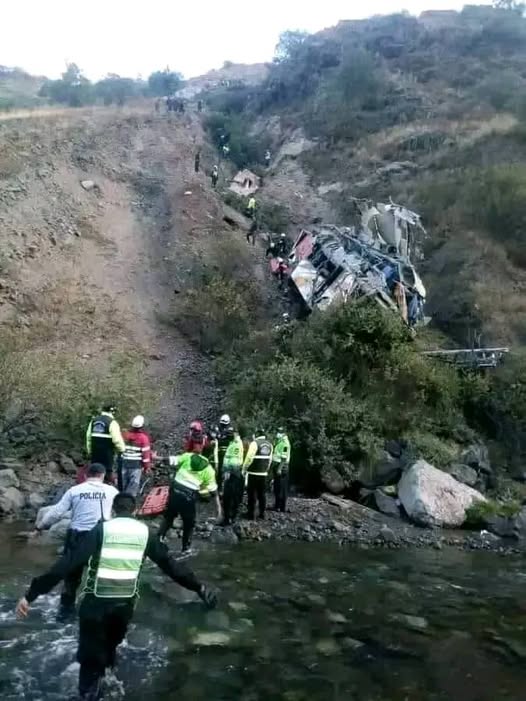
A devastating unfolded in the mountainous region of Ayacucho, Peru, in 2024, when a passenger bus veered off a narrow road and plunged into a deep ravine, leaving at least 23 people dead and 15 others injured. The incident has once again highlighted the dangers of traveling through the country’s rugged Andean terrain, where winding roads, steep cliffs, and unpredictable conditions often pose serious risks to motorists and passengers alike.
The accident occurred during the early hours of the morning, when the bus was reportedly traveling along a remote highway connecting rural communities to the city of Ayacucho. According to local authorities, the vehicle lost control on a sharp curve before crashing through a roadside barrier and falling hundreds of meters into a steep abyss. Emergency responders were immediately dispatched to the scene, but rescue efforts were complicated by the difficult geography and limited accessibility of the crash site.
Witnesses described hearing a loud crash followed by silence, as the bus disappeared into the ravine below. Residents from nearby villages rushed to assist, climbing down the dangerous slope in an attempt to reach survivors before emergency services arrived. Their bravery played a crucial role in saving lives, as several injured passengers were pulled from the wreckage and transported to nearby medical facilities for urgent treatment.
Authorities confirmed that the bus was carrying more passengers than initially reported, raising concerns about overcrowding—a common issue in rural transport services. Many of the victims were families and individuals traveling for work, education, or personal reasons, making the tragedy even more heartbreaking for the local community. Hospitals in Ayacucho quickly became overwhelmed as injured survivors arrived, some in critical condition.
Preliminary investigations suggested that a combination of factors may have contributed to the accident. Officials pointed to the possibility of excessive speed, mechanical failure, and poor road conditions as potential causes. The narrow, unpaved sections of the highway, coupled with a lack of proper guardrails in certain areas, have long been criticized by safety advocates. Additionally, fatigue among drivers operating long-distance routes has been identified as a recurring concern in similar incidents across the region.
Government officials expressed their condolences to the families of the victims and pledged to conduct a thorough investigation. They also emphasized the urgent need to improve road safety infrastructure, particularly in high-risk مناطق like Ayacucho. Measures such as stricter vehicle inspections, better driver training programs, and enhanced monitoring of transport companies have been proposed as steps to prevent future tragedies.
This incident is not an isolated case. Peru has faced numerous deadly bus accidents over the years, many occurring in mountainous areas where roads are often poorly maintained. Despite ongoing efforts to improve transportation safety, enforcement remains inconsistent, especially in remote regions where resources are limited. As a result, passengers frequently rely on services that may not meet adequate safety standards.
The human toll of the Ayacucho tragedy is immeasurable. Families have been left grieving the sudden loss of loved ones, while survivors face a long road to recovery, both physically and emotionally. Local communities have come together in mourning, holding vigils and offering support to those affected. Religious leaders and community organizers have also stepped in to provide counseling and assistance during this difficult time.
In the aftermath of the crash, there has been renewed public pressure on authorities to take meaningful action. Advocacy groups are calling for stricter regulations on public transportation, as well as significant investment in road infrastructure to ensure safer travel conditions. Many believe that without immediate and sustained efforts, similar tragedies will continue to occur.
As investigations continue, the Ayacucho bus accident stands as a somber reminder of the risks faced by millions who depend on road transportation in challenging environments. While the exact cause of the crash may take time to determine, the need for systemic change is clear. Improving safety standards, enforcing regulations, and investing in infrastructure are essential steps toward preventing future loss of life.
For now, the nation mourns the victims of this heartbreaking, hoping that their loss will not be in vain, but instead serve as a catalyst for change in Peru’s transportation system.