
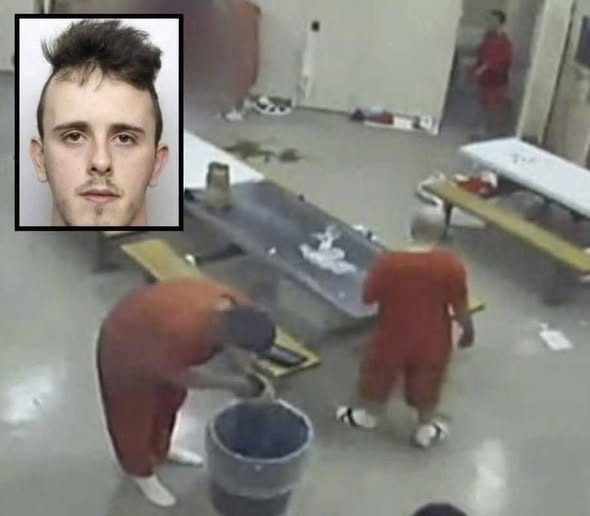
The tragic story of Liam Deane, a young man from Wakefield in West Yorkshire, stands as one of the most disturbing and emotionally painful criminal cases in recent memory. At just 22 years old, Deane became responsible for an act of violence so shocking that it reverberated far beyond his immediate community, capturing national attention and prompting deep reflection on issues of violence, mental health, responsibility, and the protection of vulnerable lives. The death of his newborn daughter, Luna, who was only two days old at the time, represents a profound and heartbreaking loss that continues to raise troubling questions about how such a tragedy could occur and whether it might have been prevented.
From the outset, the case was marked by its sheer incomprehensibility. Newborn children symbolize innocence, fragility, and new beginnings. The idea that a life so young could be violently taken by a parent—someone entrusted with the role of protector—was almost impossible for the public to process. Luna had barely begun her life when it was abruptly and cruelly ended, leaving behind a legacy not of experiences lived, but of grief, unanswered questions, and collective sorrow.
During the trial that followed Luna’s death, the court heard harrowing details about the circumstances surrounding her final moments. These revelations were deeply distressing, even for seasoned professionals accustomed to hearing accounts of serious crime. Members of the public, legal representatives, and those personally connected to the case struggled to comprehend the brutality involved. The prosecution laid out evidence that painted a grim picture of uncontrolled violence, and ultimately, Liam Deane was found guilty of causing the death of his daughter.
The conviction marked a formal acknowledgment of responsibility, yet it did little to ease the emotional weight carried by Luna’s family or the wider community. Justice, in its legal sense, was served through the verdict, but justice in a moral or emotional sense remained elusive. No court ruling could restore what had been lost, and no sentence could truly reflect the magnitude of a life ended before it had the chance to begin.
Central to discussions surrounding the case was the issue of Liam Deane’s mental and emotional state. Observers and commentators alike questioned what factors might have contributed to such an extreme act of violence. Was Deane experiencing mental health difficulties that went unnoticed or untreated? Were there warning signs—patterns of anger, emotional instability, or distress—that might have indicated a risk? Or was the act a sudden and catastrophic loss of control, triggered by overwhelming stress or emotional turmoil?
While definitive answers to these questions may never be fully known, the case highlights the critical importance of mental health awareness and intervention, particularly for young parents facing the immense pressures of responsibility, sleep deprivation, financial strain, and emotional adjustment. Parenthood, especially in its earliest stages, can be an overwhelming experience. Without adequate support systems in place, individuals already struggling with emotional regulation or mental health challenges may find themselves pushed beyond their coping limits.
This tragedy underscores the necessity of early intervention and support, not only for parents but for families as a whole. Health services, social care providers, and community networks all play a vital role in identifying individuals who may be at risk of harming themselves or others. When these systems fail—or when individuals fall through the gaps—the consequences can be devastating.
Following his conviction, Liam Deane was sentenced to prison, where he began serving his punishment for the crime he had committed. However, the tragedy did not end there. While incarcerated, Deane himself lost his life under violent circumstances. Reports indicated that he was killed by another inmate, a development that added yet another layer of complexity and sorrow to an already deeply distressing case. At the time, investigations into the circumstances of his death were ongoing, raising further questions about safety, accountability, and the management of vulnerable or high-risk prisoners within the correctional system.
Deane’s death in custody sparked renewed debate about the prison system and its ability to balance punishment with protection. While many felt little sympathy for a man convicted of killing his own child, others argued that the state has a duty of care toward all individuals in its custody, regardless of their crimes. His death prompted scrutiny of prison conditions, inmate supervision, and whether sufficient measures were in place to prevent violence behind bars.
The dual loss of life—first Luna’s, then Deane’s—left a trail of devastation that extended far beyond the courtroom. For Luna’s mother and her family, the pain is almost impossible to articulate. The loss of a child is widely recognized as one of the most profound forms of grief a person can experience. To lose a newborn in such a violent and senseless manner compounds that pain immeasurably. The trauma associated with such an event does not fade quickly, if at all, and the road to healing is often long, uncertain, and deeply personal.
For the family, memories of what should have been moments of joy—first cuddles, first smiles, a lifetime of milestones—are replaced by memories of loss and heartbreak. No punishment handed down by the justice system can undo that harm. No explanation can truly satisfy the question of “why.” The emotional scars left by such a tragedy are likely to endure for years, shaping lives in ways that are both visible and unseen.
Beyond the immediate individuals involved, the case has had a wider societal impact. It has forced difficult conversations about domestic violence, emotional regulation, and the ways in which society responds to warning signs of harm. In particular, it has highlighted the vulnerability of children, who depend entirely on adults for their safety and well-being. When those entrusted with their care become sources of danger, the consequences are catastrophic.
The case has also drawn attention to the limitations of reactive systems. Too often, intervention occurs only after violence has taken place. This tragedy serves as a stark reminder of the need for preventative measures—systems that identify risk early, provide meaningful support, and address underlying issues before they escalate into irreversible harm. This includes access to mental health care, parenting education, anger management resources, and community-based support networks.
Questions remain about whether more could have been done to prevent this tragedy. Were there missed opportunities for intervention? Could earlier support or monitoring have changed the outcome? While hindsight cannot change the past, it can inform future action. Learning from such cases is essential if similar tragedies are to be avoided.
Luna’s story, though heartbreakingly short, has left a lasting impression. Her life, measured in days rather than years, has become a symbol of the urgent need to protect society’s most vulnerable members. Her name is now associated with conversations about safeguarding, responsibility, and the devastating consequences of unchecked violence. In this sense, her legacy is not only one of sorrow but also one of reflection and awareness.
As investigations into Liam Deane’s death continued, many emphasized the importance of keeping the focus on Luna and the loss suffered by her family. While debates about criminal justice, prison safety, and mental health policy are important, they must not overshadow the central truth of the case: a newborn child lost her life in an act of senseless violence.
Ultimately, this tragedy serves as a powerful reminder of the far-reaching impact of violence within families. It challenges society to examine how it supports those in emotional distress, how it protects those who cannot protect themselves, and how it responds when systems fail. The hope is that by confronting these difficult questions openly and honestly, steps can be taken to prevent similar losses in the future.
In remembering Luna, there is a collective responsibility to ensure that her story leads to meaningful change. Protecting children, supporting vulnerable parents, and addressing the root causes of violence are not abstract ideals—they are urgent necessities. Only through sustained effort, compassion, and accountability can society hope to reduce the likelihood of such devastating events occurring again.