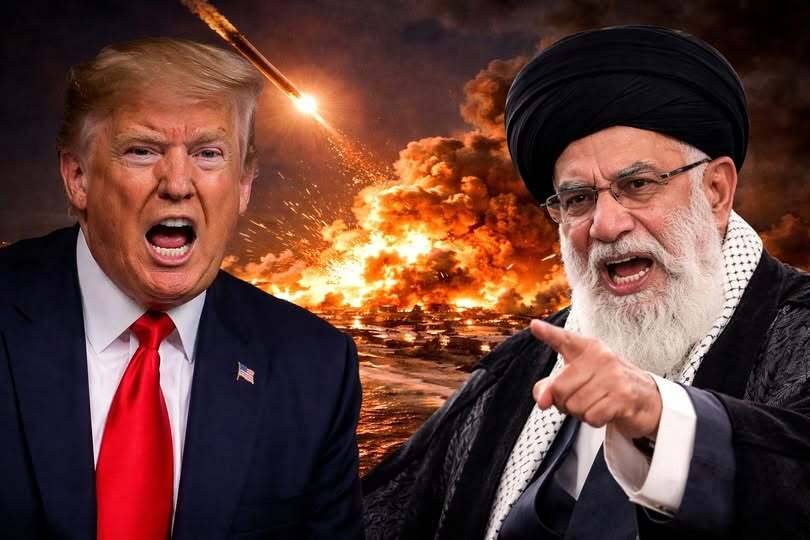
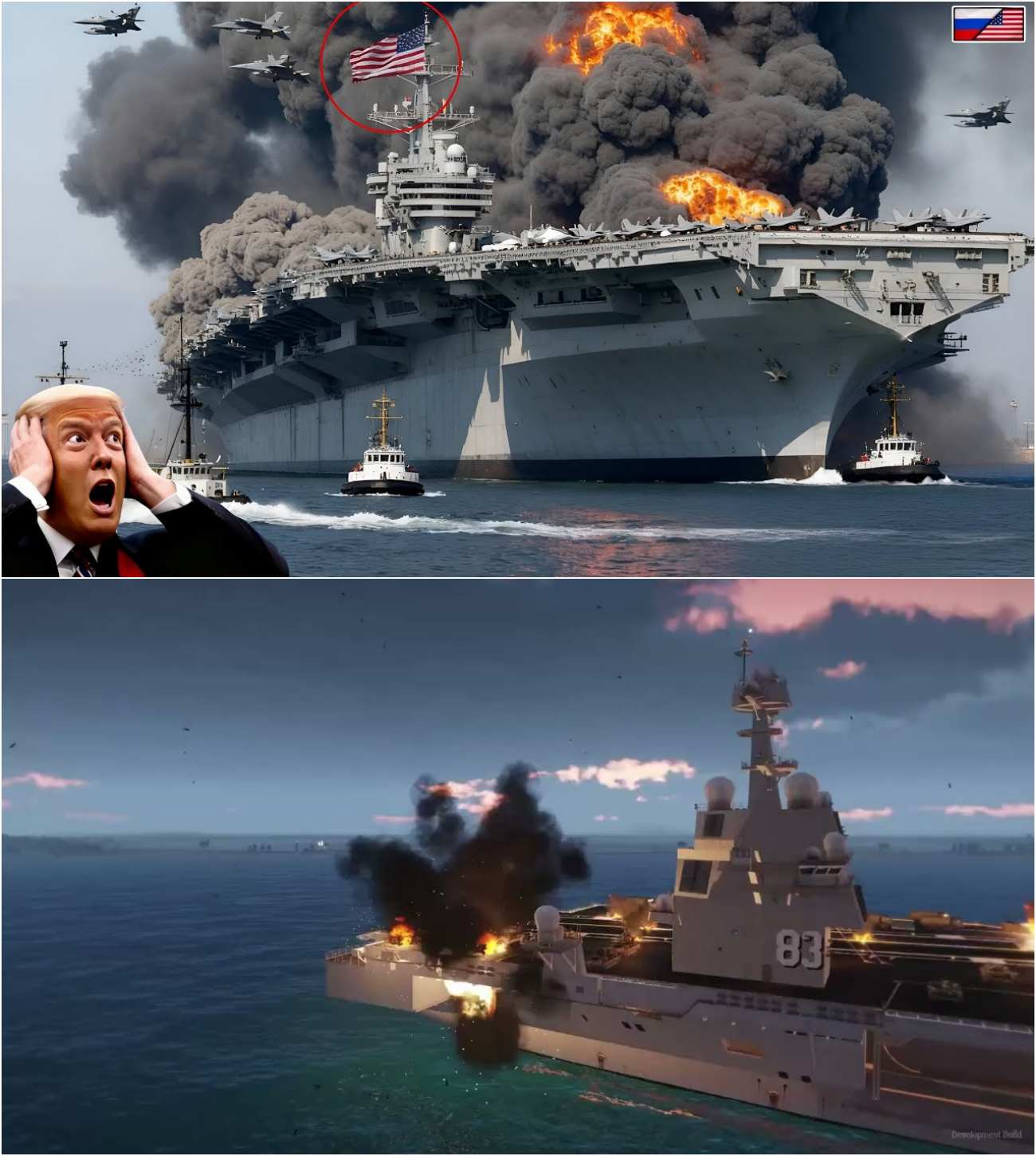
In a high-stakes game of military brinkmanship, Iran made a bold move that would quickly spiral into a catastrophic miscalculation. On a tense afternoon in the volatile Strait of Hormuz, elements of the Islamic Revolutionary Guard Corps (IRGC) reportedly initiated a missile strike targeting the USS Theodore Roosevelt, a nuclear-powered aircraft carrier operating in the region. The attempted strike marked a dramatic escalation in already fragile tensions and set off a chain of events that would unfold with breathtaking سرعت and precision.
According to defense sources, multiple anti-ship missiles were launched from coastal positions along Iran’s southern shoreline. Within seconds, advanced radar systems aboard the carrier strike group detected the launches. The USS Theodore Roosevelt, one of the most formidable warships ever built, was not operating alone. It was surrounded by a protective screen of guided-missile destroyers and cruisers equipped with the Aegis Combat System, designed specifically to counter threats of this nature.
As alarms sounded across the carrier, American forces moved with drilled efficiency. Interceptor missiles were launched from escort vessels, while electronic warfare systems attempted to jam and confuse the incoming projectiles. In the span of mere minutes, the sky above the Gulf became a complex battlefield of radar signals, intercept trajectories, and defensive countermeasures. Several of the Iranian missiles were successfully destroyed mid-air, erupting in flashes over open water.
One missile reportedly evaded initial interception but was ultimately neutralized by a close-in weapon system moments before potential impact. The entire engagement, from launch detection to final interception, lasted just over half an hour. By the end of those 32 minutes, the carrier remained fully operational, and no casualties were reported among the more than 4,000 personnel aboard.
The failed strike carried immediate consequences. U.S. Central Command elevated force protection levels across the region, and additional naval assets were repositioned to secure key shipping lanes. Fighter jets launched from the Roosevelt conducted combat air patrols, signaling readiness for further escalation. Military analysts described the attempted attack as a calculated gamble by Tehran—one that underestimated both the layered defenses of a U.S. carrier strike group and Washington’s likely response.
The Strait of Hormuz, through which roughly a fifth of the world’s oil supply passes, has long been a flashpoint for confrontation. Any direct attack on a U.S. aircraft carrier represents one of the most serious forms of military provocation possible. Such vessels are not merely ships; they are floating airbases and symbols of American global power projection.
Iranian officials did not immediately confirm responsibility, though state-aligned media framed the event as part of broader resistance efforts in the Gulf. Meanwhile, U.S. officials condemned the launch as reckless and destabilizing, warning that any further aggression would be met with decisive action.
In the end, what may have been intended as a show of strength instead highlighted the technological sophistication and readiness of U.S. naval forces. The confrontation served as a stark reminder that in modern warfare, miscalculation can unfold in minutes—and the balance of power can hinge on systems designed to respond faster than human reaction alone.