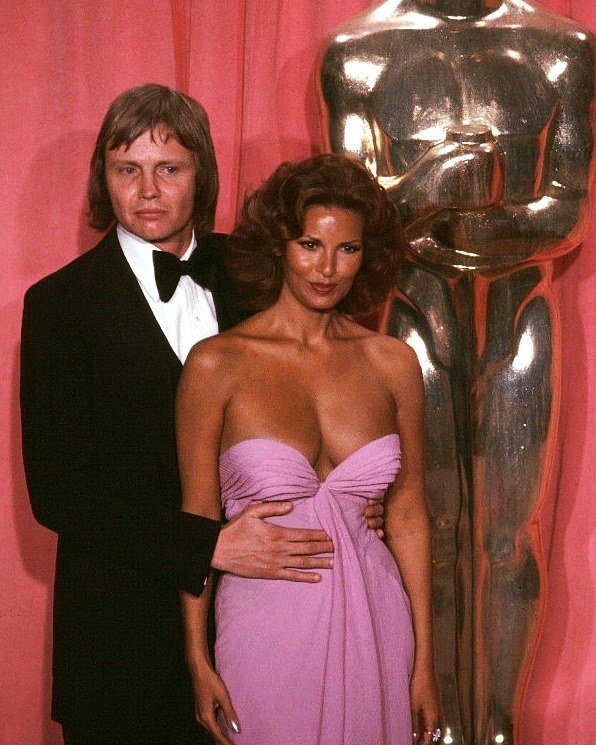
There’s something almost haunting about those old Academy Awards photographs — a stillness in the black-and-white smiles, a shimmer in the satin gowns, a dignity in the way winners held their statuettes close to their chests. They evoke memories of a different era, a different America, when the Oscars felt less like a spectacle competing for viral moments and more like a shared cultural ritual. Back then, celebrities seemed to embody a kind of untouchable glamour — polished, poised, and impossibly elegant beneath the glow of the stage lights.
When you revisit ceremonies like the 1975 broadcast, you can almost feel the reverence in the room. The camera lingered longer. Applause felt fuller. The speeches, even when imperfect, carried a certain restraint. Stars like Ingrid Bergman, Al Pacino, and Faye Dunaway represented not just fame, but mystique. There was an aura around them — something cultivated carefully by studios and sustained by distance. The red carpet wasn’t yet an endless scroll of commentary; it was a moment of arrival.
Perhaps what feels most striking now is the awareness that so many of those faces are no longer with us. Time has a way of reshaping nostalgia into something softer and more poignant. Seeing performers who once dominated the screen — laughing, waving, basking in applause — becomes a reminder of how fleeting even the brightest spotlight can be. Their performances live on, but the people behind them have faded into history. That realization carries a quiet ache.
I remember a time when I knew every nominee, every film competing for Best Picture, every melody nominated for Best Original Song. The Oscars were a culmination of a year in cinema that felt cohesive and widely shared. Movies lingered in theaters. Audiences returned for second and third viewings. There was a sense that everyone had seen the same stories, argued over the same performances, and anticipated the same envelope openings. Now, with streaming platforms, niche releases, and fragmented audiences, it can feel nearly impossible to keep up. The cultural conversation no longer gathers in one place.
Someone once described the 1975 ceremony as “back when actors and actresses had class and no political agenda.” That sentiment captures a common nostalgia, though it may oversimplify reality. Hollywood has never existed in a vacuum. Even in earlier decades, films and acceptance speeches reflected the social currents of their time — from civil rights to war to shifting cultural norms. Politics may not have felt as amplified, but it was never entirely absent.
What may truly feel lost is not class or even neutrality, but cohesion. The illusion that entertainment existed apart from the world outside. Today’s ceremonies unfold in an era of instant commentary, social media reactions, and deeply divided audiences. Every statement is dissected in real time. The glamour remains, but it competes with noise.
Still, when we look back at those vintage images, what we’re really mourning may not be a better era, but a younger version of ourselves — a time when movies felt magical, stars seemed eternal, and the world, however imperfect, felt simpler through the soft glow of a television screen.