
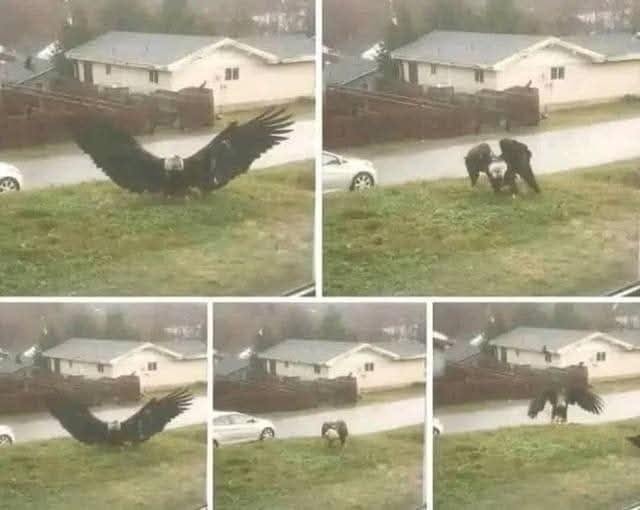
Introduction: When Wildlife Surprises Us
In recent weeks, residents and visitors in the lower Rio Grande Valley near Brownsville, Texas, have reported sightings of an unusually large bird of prey. These reports have drawn significant attention, not only from local enthusiasts but also from professional wildlife researchers and ornithologists. Witnesses described encountering a raptor whose wingspan appeared far beyond what is typically observed in familiar species such as bald eagles, golden eagles, or even the much larger California condors.
The accounts, coming from multiple independent sources, prompted a careful, structured response from both local authorities and wildlife experts. Unlike many sensational claims that circulate online, this situation is notable for the consistency of observations over time and across diverse locations, suggesting that something remarkable might indeed be occurring in the skies of southern Texas.
Witness Accounts: Multiple Perspectives
Hikers traversing riverside trails, farmers monitoring their land, and birdwatchers exploring protected corridors all reported sightings of the large raptor. Many described the bird as imposing, with a wingspan that seemed to dwarf familiar regional species. Observers noted its silent flight, powerful wingbeats, and commanding presence, often describing a mixture of awe and curiosity at seeing such an unexpected visitor.
These reports were collected systematically, and officials emphasized the importance of gathering as many details as possible from observers. Factors such as the distance of the sighting, lighting conditions, and environmental context were all considered. This careful approach allowed experts to compare accounts and identify patterns that might help explain the sightings, whether through identification of a known species or recognition of something unusual.
Scientific Investigation Begins
In response to these reports, local wildlife officials partnered with ornithologists and other experts in avian biology to begin a thorough investigation. The research team focused on noninvasive monitoring techniques, designed to observe the bird without disrupting its natural behavior. These included:
Motion-activated cameras placed strategically along trails and open areas
Thermal imaging devices to detect heat signatures during early morning or late evening
Long-range optics, such as spotting scopes and high-powered binoculars, to capture detailed images from a safe distance
The team faced challenges due to the region’s diverse terrain. The lower Rio Grande Valley consists of river systems, agricultural land, and stretches of protected wildlife corridors, creating both obstacles and opportunities for observation. Still, the researchers emphasized patience and persistence, noting that elusive wildlife often requires sustained effort to document reliably.
Analyzing the Footage
After reviewing several hours of captured footage, researchers noted a raptor appearing significantly larger than typical species observed in the area. Experts cautioned against jumping to conclusions, pointing out that visual perception can sometimes exaggerate size, particularly when a bird flies close to the observer or above reflective surfaces such as water.
Nevertheless, the footage sparked serious scientific interest. The bird’s wingspan, body structure, and flight pattern were notable enough to warrant further study. To maintain accuracy, the bird was formally labeled as an “unidentified large raptor” until more conclusive evidence could be gathered, reflecting the discipline required in wildlife research.
Possible Explanations
Experts have outlined several explanations for the sighting, emphasizing measured scientific reasoning over speculation:
Misidentification: It is possible that observers overestimated the bird’s size or misidentified a known species under unusual circumstances. Lighting, distance, and viewing angle can all affect perception.
Rare genetic variation: Occasionally, individual animals exhibit abnormal size due to genetic factors. A particularly large specimen of a common species could account for the reports without invoking unknown species.
Undocumented migratory or vagrant individuals: Birds sometimes stray far from their typical ranges, creating surprising sightings in unexpected regions.
By remaining cautious, scientists stress the importance of avoiding premature conclusions while continuing systematic observation.
Implications for Wildlife Monitoring
This event has sparked broader discussions about how much remains unknown in even heavily studied ecosystems. The Rio Grande Valley, while heavily monitored due to its ecological significance and popularity among birdwatchers, still harbors species and individuals that can surprise even experienced experts.
Wildlife biologists point out that this case serves as a reminder of several key principles:
Patience and persistence are essential: Documenting rare or elusive species often requires weeks or months of careful monitoring.
Data collection must be systematic: Consistency and detail in reporting ensure that unusual sightings can be verified or explained scientifically.
Scientific uncertainty is normal: Not knowing the full explanation immediately is not failure; it is part of the process of discovery.
Caution Against Sensationalism
Authorities have urged the public and media to avoid sensational interpretations of the sightings. While the idea of a “giant eagle” or unknown prehistoric bird is captivating, such claims remain speculative without verified evidence. Researchers emphasize that maintaining a scientific approach—observing, recording, and analyzing—is the most responsible way to advance understanding.
At the same time, the unusual reports highlight the fascination humans have with wildlife and the natural world. Observers expressed excitement and wonder, underscoring the emotional connection people feel when encountering creatures that challenge expectations.
Next Steps in Research
The team plans to continue monitoring the area using both technological tools and community reporting networks. By combining high-quality imagery with citizen science efforts, researchers hope to gather enough data to identify the bird confidently. This might include direct measurements, behavioral analysis, or even genetic sampling if the bird can be safely captured or observed closely.
Conclusion
The recent sightings of a large, unidentified raptor in the lower Rio Grande Valley offer an intriguing glimpse into the mysteries that can still be found in familiar environments. They remind us that even in areas studied extensively, nature can present surprises that challenge understanding and inspire curiosity.
While the ultimate identity of the raptor remains unknown, the ongoing investigation reflects the careful, patient approach of modern wildlife science. It underscores the importance of observation, rigorous analysis, and respect for both the animals and the ecosystems they inhabit.
As research continues, scientists, locals, and bird enthusiasts alike are watching the skies with renewed interest, hopeful that more evidence will provide clarity and perhaps reveal an extraordinary chapter in North American wildlife history.
Rare Giant Raptor Spotted in Texas Captivates Experts and Locals
In late 2025, unusual reports began emerging from the lower Rio Grande Valley near Brownsville, Texas. Hikers, local residents, and wildlife enthusiasts described seeing an exceptionally large bird of prey soaring over the region. According to multiple accounts, the bird appeared to have a wingspan far greater than that of commonly known species in North America, such as bald eagles or condors. The consistency of these independent sightings quickly drew attention from scientists and wildlife officials, who decided to investigate with careful observation rather than speculation.
Witness Reports Spark Interest
Observers described the raptor as imposing, noting its impressive wingspan and commanding presence. Several reported seeing the bird glide silently above rivers, farmland, and protected wildlife corridors, often expressing surprise at its sheer size. Officials collected detailed accounts, emphasizing the importance of including specifics such as viewing conditions, distances, and timing. These consistent descriptions provided the foundation for a structured study rather than relying on anecdotal evidence alone.
Scientific Investigation and Observation
In response, local wildlife authorities partnered with ornithologists to monitor the area using noninvasive techniques. Motion-activated cameras were placed along trails and open spaces, thermal imaging helped track the bird during low-light hours, and long-range optics allowed researchers to observe its behavior without interference. The Rio Grande Valley’s varied landscape, with its mix of rivers, farmland, and protected corridors, made monitoring challenging but offered unique opportunities for observation.
Footage gathered during this effort appeared to show a raptor larger than any typically documented in the region. Experts approached the evidence cautiously, noting that perspective and distance can affect size perception. To maintain scientific integrity, the bird was described as an “unidentified large raptor”, highlighting the need for additional verification before reaching any conclusions.
Possible Explanations
Ornithologists have outlined several plausible reasons for the sightings:
Misidentification: Observers could have overestimated size or misidentified a known species under unusual lighting or distance conditions.
Rare individual variation: Some birds grow larger than the species average due to genetics or environmental factors, creating the appearance of a “giant” bird.
Vagrant or migratory visitor: Birds occasionally appear outside their typical range, explaining unusual sightings in well-studied areas.
Lessons for Wildlife Monitoring
The case has sparked broader conversations about how elusive animals can remain undetected even in monitored ecosystems. Scientists stress that patience, careful data collection, and systematic analysis are essential in wildlife research. Sudden sightings of unusual animals remind us that nature often holds surprises, even in familiar regions.
Authorities caution against sensationalized interpretations. While the idea of a previously unknown “giant eagle” is enticing, the scientific approach relies on observation, documentation, and evidence. The situation highlights the balance between public curiosity and disciplined research, showing how careful study can turn extraordinary claims into verified knowledge.
Continuing Research
Experts continue monitoring the area with a combination of technology and local reporting networks. Motion cameras, thermal sensors, and long-range optics remain in use, while citizen observations supplement official efforts. The hope is to gather enough data to determine whether this raptor represents an unusually large individual of a known species or a rarer phenomenon.
Until further verification, the mystery of the Rio Grande Valley raptor continues to intrigue both scientists and locals. The sighting serves as a reminder that the natural world still has surprises waiting to be discovered, and that careful observation and research are the best ways to appreciate and understand these extraordinary events.